Write- Refractive Lens Exchange Patient Reviews Oklahoma -Weber Tang
If you've been taking into consideration SMILE eye surgical procedure, you might question just how it compares to LASIK and PRK. Each procedure has its very own collection of advantages and considerations. From quicker recovery times to potential dangers, there are vital differences you must know prior to making a decision. Recognizing these distinctions will aid you make an informed option that lines up with your certain needs and expectations. Interested to know more about exactly how these treatments compare carefully? Go on checking out to get a comprehensive understanding of SMILE, LASIK, and PRK.
SMILE Eye Surgical Treatment Introduction
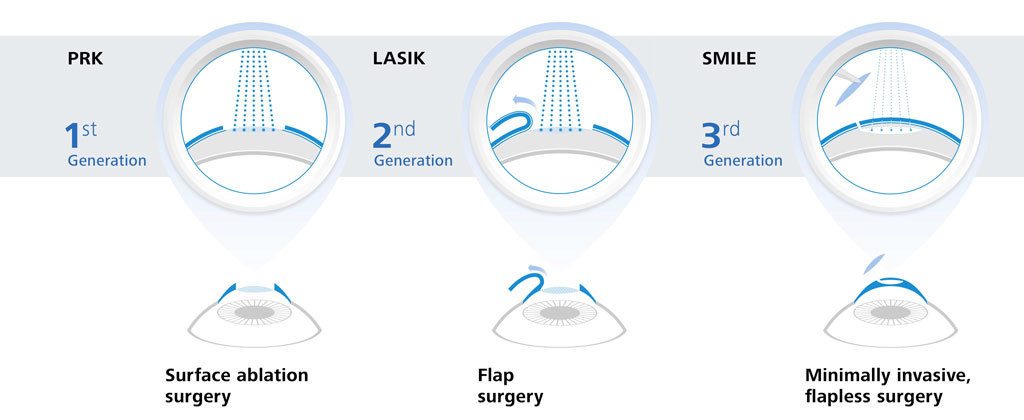
If you're thinking about SMILE eye surgical treatment, you'll find it to be a minimally invasive treatment with a fast healing time. During SMILE (Little Laceration Lenticule Extraction), a laser is utilized to develop a little, exact cut in the cornea to eliminate a tiny item of tissue, reshaping it to correct your vision. This differs from LASIK, where a flap is produced, and PRK, where the external layer of the cornea is completely removed.
Among the vital benefits of SMILE is its minimally intrusive nature, leading to a faster recovery procedure and much less discomfort post-surgery. The recuperation time for SMILE is fairly fast, with many clients experiencing enhanced vision within a day or 2. https://squareblogs.net/chanell92omer/facing-real-life-barriers-what-activities-to-take-if-your-lasik-surgical makes it a preferred choice for those looking for a practical and effective vision modification treatment. Furthermore, SMILE has been revealed to have a reduced threat of completely dry eye syndrome contrasted to LASIK, making it a positive option for individuals worried about this potential negative effects.
Differences In Between SMILE, LASIK, and PRK
When comparing SMILE, LASIK, and PRK eye surgical procedures, it is very important to recognize the unique techniques made use of in each procedure for vision correction.
SMILE (Tiny Incision Lenticule Removal) is a minimally invasive procedure that entails developing a small cut to remove a lenticule from the cornea, reshaping it to correct vision.
LASIK (Laser-Assisted In Situ Keratomileusis) involves developing a slim flap on the cornea, utilizing a laser to improve the underlying tissue, and then rearranging the flap.
PRK (Photorefractive Keratectomy) eliminates the outer layer of the cornea prior to reshaping the cells with a laser.
The main difference lies in the method the cornea is accessed and treated. SMILE is flapless, making it a great choice for individuals with thin corneas or those involved in get in touch with sports. LASIK uses fast visual recovery because of the flap development, but it may position a greater threat of flap-related problems. PRK, although having a much longer recuperation duration, avoids flap-related concerns completely.
Understanding these variations is crucial in selecting one of the most ideal treatment for your vision adjustment requirements.
Advantages And Disadvantages Contrast
To evaluate the benefits and disadvantages of SMILE, LASIK, and PRK eye surgical procedures, it's necessary to consider the particular advantages and possible restrictions of each treatment. Suggested Browsing uses the advantage of a minimally invasive treatment, with a smaller incision and potentially quicker recovery time compared to LASIK and PRK. It also minimizes the danger of completely dry eye post-surgery, a common adverse effects of LASIK. Nonetheless, SMILE may have constraints in dealing with higher degrees of nearsightedness or astigmatism contrasted to LASIK.
LASIK surgical procedure supplies quick visual recuperation and very little pain during the treatment. It's extremely efficient in dealing with a variety of refractive errors, including myopia, hyperopia, and astigmatism. Yet, LASIK carries a danger of flap problems, which can impact the corneal framework.
PRK eye surgical procedure, while not as prominent as LASIK, avoids producing a corneal flap, decreasing the risk of flap-related difficulties. It appropriates for clients with slim corneas or uneven corneal surface areas. Nonetheless, PRK has a much longer recovery time and may entail a lot more discomfort during the healing procedure.
Verdict
So, when it concerns choosing in between SMILE, LASIK, and PRK, consider it like choosing the ideal pair of shoes. SMILE resembles a smooth, comfy set of sneakers - fast and simple.
LASIK is much more like fashionable high heels - flashy and fast, but with some prospective dangers.
PRK resembles tough treking boots - dependable and durable, yet requiring a bit even more time and effort.
Eventually, the best option relies on your specific demands and preferences.