Posted by-Gravesen Wyatt
Refractive Lens Exchange (RLE) is a secure and reliable vision corrective treatment that is often made use of for clients who can not receive LASIK or various other laser vision adjustment procedures.
During RLE, the natural lens of the eye that has actually come to be rigid as well as can no more focus is eliminated as well as changed with a manmade artificial implant. This permits the person to see plainly at both far and wide ranges without glasses or contact lenses.
LASIK vs. RLE
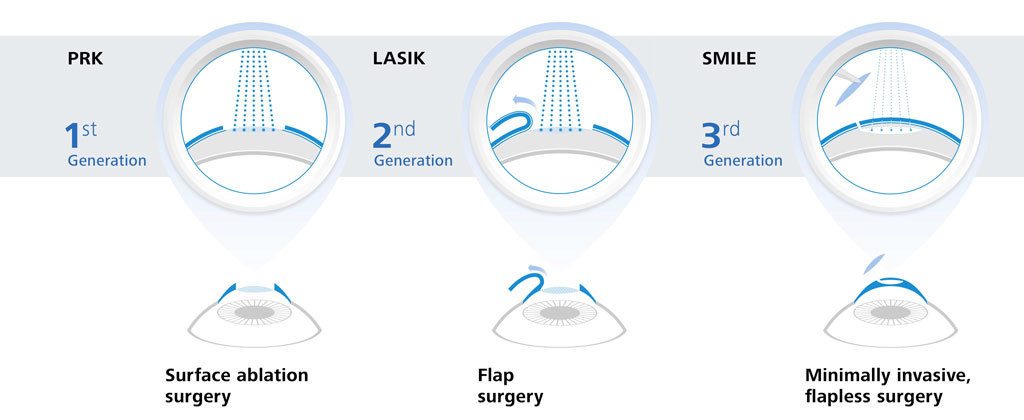
LASIK, PRK as well as other laser vision adjustment procedures enhance refractive mistakes like nearsightedness (myopia), farsightedness (hyperopia) or astigmatism by improving the cornea. These treatments likewise remove or lower a patient's requirement for glasses or call lenses.
Refractive lens exchange, or RLE, is a various technique to elective refractive surgical treatment than laser vision adjustment. It changes the eye's natural lens with a man-made intraocular lens, or IOL.
This procedure can remove the requirement for glasses or calls as well as stop future cataract growth. It is a fantastic choice for people who do not receive LASIK or who are older and also have presbyopia, or age-related blurred near vision.
Throughout RLE, your eye's all-natural lens is removed and also changed with an artificial IOL that offers clear vision at a single concentrating range. The option of IOL relies on your treatment expectations and also a Mittleman Eye specialist will certainly help you choose the appropriate kind for your distinct visual requirements.
RLE vs. PRK
RLE (Refractive Lens Exchange) is a newer sort of vision correction surgical treatment that can be more effective for some individuals than LASIK or PRK. It can likewise assist improve a patient's lifestyle by minimizing the need to wear glasses.
RLE can be an excellent option for patients who have a high level of myopia, hyperopia or astigmatism that would certainly make them ineligible for LASIK or PRK. It is likewise an excellent option for patients that have age-related vision problems, like presbyopia or cataracts.
Refractive Lens Exchange is commonly executed for clients over 40 and who have a modest to high level of refractive mistake. It is also beneficial to people who have a thin cornea since they do not need to fret about the flap of their cornea being damaged by LASIK.
RLE vs. Monovision
Refractive lens exchange, or RLE, is a safe and efficient vision modification treatment that eliminates your eye's natural lens, and also changes it with a man-made intraocular lens (IOL). It is frequently utilized to deal with presbyopia, or the age-related blurring of up-close vision.
Clients that have actually not been prospects for LASIK because of their corneal density might be suitable for RLE. EVO ICL Correction Surgery makes individuals unsusceptible to developing cataracts, a common eye disease that causes clouding of the all-natural lens.
As an alternative to monovision LASIK, refractive lens exchange is an excellent solution for older grownups that need reading glasses. This treatment is likewise valuable for people with exceptionally thin corneas that are not prospects for laser eye surgery.
RLE vs. Monofocal IOLs
Refractive Lens Exchange (RLE) is an excellent option for patients that do not get approved for LASIK or for those that intend to improve their vision at several distances. During RLE, your all-natural lens is replaced with an intraocular lens (IOL) of your choice based upon your requirements and choices.
For clients who desire clear vision at one range only, a monofocal IOL is advised. Making use of the technique referred to as micromonovision, a monofocal IOL can be positioned that deals with range and near vision at the same time.
Additionally, simply click the next site can select a multifocal IOL to offer clear vision at multiple ranges at a solitary focus factor. Multifocal IOLs are also referred to as extended deepness of focus or accommodating IOLs.
During the RLE treatment, your all-natural lens is removed via a tiny laceration less than 3mm and changed with an IOL that is put through the very same opening. Your eye will recover quickly and you ought to be able to resume regular activities within a week of surgical treatment.